Why Are You Always Bloated? The Food Intolerance Connection Most People Miss
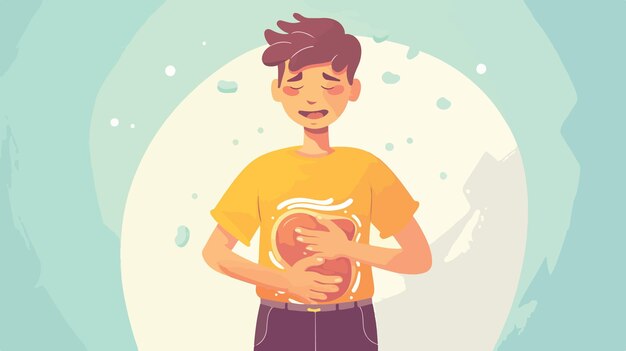
It starts the same way for most people. Breakfast feels fine. By noon, your stomach is tight. By evening, the bloating is bad enough that you've changed out of your jeans. You don't feel sick exactly. Just uncomfortable, frustrated, and no closer to understanding why.
April is IBS Awareness Month, and this year there's more reason than ever to talk about bloating honestly. New research from Ipsos found that one in four Britons now reports a food allergy or intolerance, and 39% of those with an intolerance figured it out themselves, without a clinical diagnosis. They tracked, eliminated, reintroduced, and observed. They did the work.
This article is about what bloating actually signals, why it so often points to food intolerance, and what the most effective first step looks like.
Bloating Is Not Just "Eating Too Much"
Bloating has a reputation as a minor complaint, something to push through or blame on a heavy meal. But for millions of people, it's a daily reality that affects their mood, their concentration, their social life, and their relationship with food.
People with IBS typically suffer for five or more years before receiving a diagnosis. That's five years of bloating, guessing, eliminating foods, reintroducing them, and still not knowing what's actually happening.
The reason it takes so long isn't that the condition is rare or exotic. It's that the symptoms overlap. Bloating, gas, cramps, fatigue, irregular digestion: these are shared by IBS, lactose intolerance, gluten intolerance, histamine intolerance, FODMAP sensitivity, and a dozen other conditions. Without a way to track patterns over time, it's nearly impossible to tell them apart.
The Four Most Common Food Intolerance Connections to Bloating
1. Lactose Intolerance
Lactose intolerance is the most searched intolerance globally and one of the most direct causes of bloating. When the body doesn't produce enough lactase (the enzyme that breaks down lactose, the sugar in dairy), undigested lactose reaches the colon. There, gut bacteria ferment it, producing gas and causing the characteristic bloating, cramps, and urgency that follow a glass of milk or a bowl of yogurt.
The timing is usually within 30 minutes to two hours after eating dairy. But because dairy is in so many foods (baked goods, sauces, processed snacks, coffee drinks), people often can't pin down the source. They blame stress. They blame eating too fast. The actual trigger goes undetected for months or years.
2. Gluten Intolerance and Non-Celiac Sensitivity
Gluten intolerance (separate from celiac disease, which is an autoimmune condition) causes bloating, abdominal pain, fatigue, and brain fog in a growing number of people. The bloating tends to arrive hours after eating wheat, barley, or rye, sometimes long enough after the meal that the connection isn't obvious.
Signs of gluten intolerance in adults include bloating and stomach pain after eating bread, pasta, or baked goods, fatigue and brain fog, joint pain, and headaches. The delay between eating and symptoms is one reason gluten sensitivity takes so long to identify through observation alone.
3. Histamine Intolerance
This is the one that surprises people most. Histamine is a compound that occurs naturally in aged, fermented, and preserved foods. When the body's ability to break down dietary histamine is reduced, it accumulates and causes symptoms that look like an allergy but aren't one.
Histamine intolerance rarely presents as one clear or dramatic symptom. Instead, it tends to show up as a pattern of recurring, often meal-related symptoms that affect more than one system in the body at the same time. Bloating and abdominal discomfort are among the most frequently reported, but they appear alongside headaches, skin flushing, nasal congestion, and heart palpitations, creating a picture that doesn't fit neatly into any diagnosis.
Patients come in frustrated. They've cut out gluten, cleaned up their diet, done everything "right" and they're still dealing with headaches, bloating, hives, or a runny nose that no one can explain. Histamine is often what's left when everything else has been ruled out.
High-histamine foods include red wine, aged cheeses, cured meats, fermented vegetables (sauerkraut, kimchi), vinegar, leftover cooked meat, and canned fish. The tricky part: reactions are cumulative. One glass of wine might be fine. Wine with aged cheese after a day of leftovers might not be.
4. FODMAP Sensitivity
FODMAPs are fermentable carbohydrates found in a wide range of everyday foods: garlic, onions, apples, wheat, legumes, and many dairy products. For people with IBS or functional gut disorders, these carbohydrates ferment rapidly in the colon, producing gas and causing significant bloating.
Gas production can increase due to poor digestion, food intolerances, or an imbalance in gut bacteria. FODMAP sensitivity is particularly hard to identify without tracking because the trigger foods are often considered healthy and consumed in almost every meal.
IBS or Food Intolerance: How to Tell the Difference
This is one of the most common questions in gut health. The honest answer is: the distinction isn't always clean.
IBS can sometimes be tricky to diagnose because it has a bunch of symptoms that are similar to other conditions. Lactose intolerance, celiac disease, and even endometriosis can all produce IBS-like symptoms. A clinical diagnosis of IBS doesn't rule out a food intolerance. They can and often do coexist.
What matters more than the label is understanding your triggers. Someone with IBS may have their symptoms significantly worsened by high-FODMAP foods, dairy, or histamine-rich meals. Identifying and managing those triggers often improves quality of life more than any medication or broad-spectrum dietary restriction.
IBS is caused by an oversensitive connection between the gut and brain, not damage or disease in the digestive tract. This means that food triggers and stress are both real levers. Tracking both is essential.
Why Self-Diagnosis Falls Short (and What Works Instead)
Two in five of those with an intolerance diagnosed themselves by researching their symptoms. Many of them are right. But self-diagnosis by symptom research alone has a significant failure rate because the same symptoms can come from multiple causes, and the human memory of what we ate hours or days ago is unreliable.
The difference between someone who successfully identifies their food triggers and someone who doesn't is almost never the quality of their research. It's the quality of their observation.
Specifically, it comes down to tracking. Not just food, but timing, portion size, stress levels, sleep quality, eating context (home-cooked vs. restaurant), and symptom severity. Patterns don't reveal themselves in a single bad day. They emerge across weeks of consistent, honest logging.
Scientific studies show that keeping a food and symptom diary can help up to 70% of people gain better control over their symptoms. The tool doesn't need to be complex. It needs to be consistent.
What Effective Symptom Tracking Looks Like
A good food and symptom record captures:
What you ate: Specific ingredients, not just dish names. "Pasta with sauce" is not useful. "Pasta, canned tomatoes, garlic, Parmesan, red wine" is.
When you ate: The time matters because intolerance reactions are often delayed. A histamine reaction can take hours. A FODMAP reaction can follow within two hours. The gap between eating and symptoms is itself diagnostic information.
How you felt: Not just "bloated" but the severity, the timing of onset, whether it resolved on its own or lasted the evening, whether it affected your mood or energy.
Contextual factors: Stress levels on that day, sleep the night before, whether you ate at home or out.
Over two to four weeks of consistent tracking, patterns become visible that no amount of symptom googling can reveal.
This is the gap that Intolera was designed to close. Not to tell you what you have, but to help you see what's actually happening. Barcode scanning makes logging fast enough to actually do consistently. Restaurant menu analysis captures the meals where "I don't know what was in it" is usually the answer. And over time, the patterns inside your data become the clearest signal you've ever had about your own gut.
The Gut Health Signal Worth Paying Attention To in 2026
Three out of five consumers say gut health is very important for their whole body. The connection between gut function and immunity, mood, energy, and cognitive performance is now widely understood. What's lagging behind is the practical, personal application: understanding how your specific gut responds to your specific food choices.
That's not something a search engine or a single food intolerance test can tell you. It emerges from observation over time. The people who get there are not the ones who found the best article. They're the ones who paid close attention to themselves, meal by meal, long enough to find the pattern.
If you've been bloated long enough to find this article, that patience is already in you.
Key Takeaways
Bloating that happens consistently is a signal, not background noise. The most common food intolerance culprits are lactose, gluten, histamine, and FODMAPs, and they often overlap. IBS and food intolerance frequently coexist. The fastest path to clarity is not research; it is observation. A food and symptom diary, maintained consistently over several weeks, is the single most effective tool for identifying personal food triggers. And the patterns it reveals tend to be clearer and more actionable than anything a test or a search engine can provide.
This article is for informational purposes only and does not constitute medical advice. If you experience persistent digestive symptoms, consult a qualified healthcare professional. April is IBS Awareness Month.
Learn more
Discover more from the latest posts.